

Énergies Réunion, in partnership with the Réunion Region, is publishing the 2024 update of the status report on the prospects for hydrogen development on the island. Available to download, this report gives a detailed overview of the sector’s potential to meet the island’s energy challenges, while highlighting the conditions essential to its success.
Green hydrogen: a strategic energy carrier for energy autonomy in Reunion Island
Green hydrogen is emerging as a solution for the future to support Reunion Island’s energy transition. In particular, it could:
- Help reduce dependence on fossil fuels (85% in 2022)
- Facilitate the integration of intermittent renewable energy (such as solar or wind) into the electricity mix
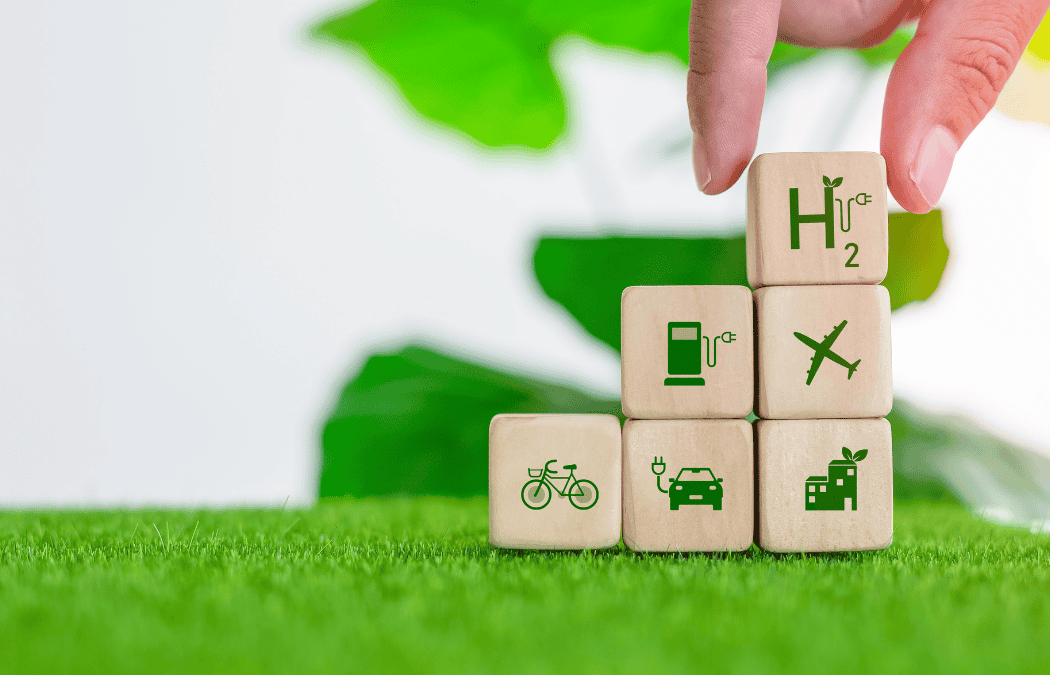
- Make clean mobility greener, particularly for heavy and intensive uses
This strategic role is in line with the national objectives set by the French hydrogen plan (SNH2 2025), which aims to make France a European leader in the sector.
Potential to be harnessed, but structural obstacles to overcome
While the advantages of hydrogen are undeniable (high energy density, no emissions at the point of use, possible recovery of the heat and water produced), its development in Reunion Island, a non-interconnected island territory (ZNI), faces several major challenges:
- Significant infrastructure costs: the facilities needed to produce, store and distribute hydrogen remain very expensive at local scale.
- Profitability still uncertain: despite efforts to lower costs through scale and innovation, green hydrogen struggles to compete with fossil fuels or other storage solutions.
- A need for stronger strategic support: sustainable development of the sector requires targeted public policies, investment incentives and suitable tax schemes.
A gradual and targeted development to be considered
The report stresses that the hydrogen sector in Reunion Island will need to be deployed gradually and strategically, by identifying priority market segments: heavy transport, specific local mobility, or the storage of renewable electricity. Innovative processes such as pyrogasification, biological hydrogen production and water photolysis will be studied in depth in the medium term.
In the longer term, the use of resources such as offshore wind, geothermal energy or waste recovery could strengthen local hydrogen production capacity.
A local momentum to encourage
The mobilisation of stakeholders in Reunion Island around hydrogen is very real. In May 2023, at the CNRS Research Federation’s national plenary sessions in Saint-Gilles-les-Bains, more than 120 researchers and around thirty local stakeholders met to discuss the scientific and industrial prospects of the sector.
Since 2025, Énergies Réunion has been the regional delegate of the France Hydrogène association, under delegation from the Réunion Region. In this capacity, it implements the action plan of France Hydrogène’s Réunion Delegation, helping to structure and boost the hydrogen sector in Reunion Island.
This momentum could enable Reunion Island to build skills in emerging hydrogen professions, a sector with strong job potential, including across the Indian Ocean (export, maintenance, waste recovery, etc.).
A reasoned development of hydrogen requires coordinated action between research, industry, local authorities and public policy.
To find out more, see the benchmarking of hydrogen in the regions here: