


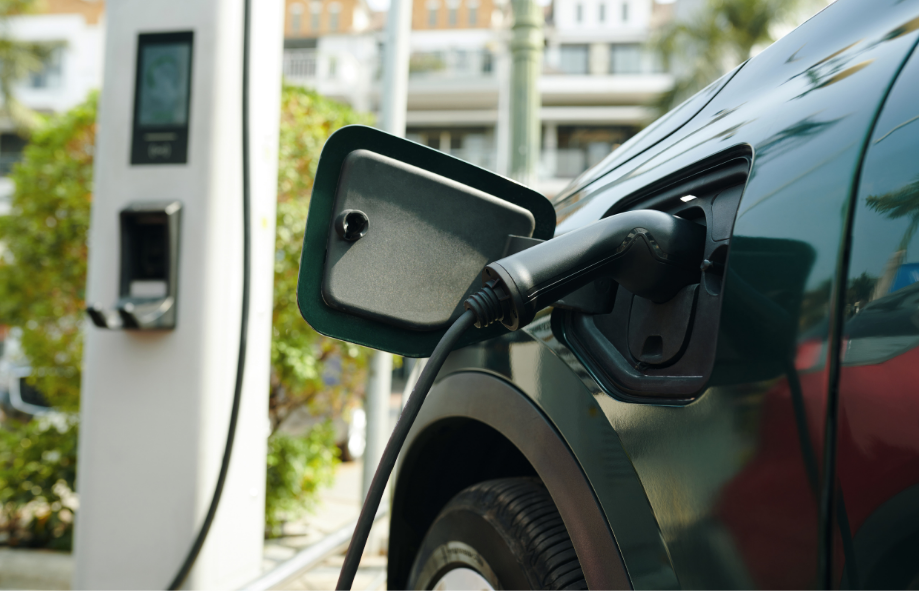
As electric mobility develops in Reunion Island, a key question arises: what energy is actually used to charge these vehicles? The environmental benefit of an electric vehicle depends directly on the origin of the electricity used. Solar photovoltaic power offers an answer particularly well suited to the context of Reunion Island.
The electric vehicle, an alternative to fossil fuels
Faced with rising imports of fossil fuels and transport-related CO₂ emissions, the electric vehicle is a credible alternative. The principle is simple: a vehicle with an electric motor powered by a rechargeable battery, via a charging point or a reinforced domestic socket.
But for this mode of transport to be truly virtuous, two key parameters must be controlled: the carbon content of the kilowatt-hour used for charging, and the impact of this charging on a non-interconnected electricity grid, such as that of Reunion Island.
Solar PV, an answer to the island’s challenges
Photovoltaic electricity production addresses exactly these two challenges. Charged during the day from cheap, low-carbon solar energy, the electric vehicle becomes a viable solution for reducing greenhouse gas emissions while saving money for the driver.
Even when there are no electric vehicles to charge, surplus photovoltaic electricity can be sold to the grid operator, or used for self-consumption in a building next to the charging points. This approach works best when supplying a captive fleet of vehicles whose arrival and departure times are known.
From theory to practice
This model is not just a principle: Énergies Réunion is already supporting local authorities in bringing such projects to life. This is notably the case for CINOR, for which we are providing project owner assistance for the creation of solar charging installations for electric vehicles.